Reconciliation

Be Impeccable With Your Word
Speak with integrity Say only what you mean, Avoid using the word to speak against yourself or to gossip about others. Use the power of your word in the direction of truth and love.

Don't Take Anything Personally
Nothing others do is because of you. What others say and do is a projection of their own reality, their own dream. When you are immune to the opinions and actions of others you won`t be the victim of needless suffering.

Don't Make Assumptions
Find the courage to ask questions and to express what you really want, Communicate with others as clearly as you can to avoid misunderstandings, sadness, and drama. With just this one principle you can completely transform your life.

Always Do Your Best
Your best is going to change from moment to moment; it will be different when you are healthy as opposed to sick. Under any circumstance, simply do your best and you will avoid self-judgment, self-abuse, and regret.


Forgiveness and Reconciliation
Jesus clearly warned that God will not forgive our sins if we do not forgive those who sin against us (see: Matthew 6:14-15; Mark 11:25). It’s not that we earn God’s forgiveness by forgiving; instead, God expects forgiven people to forgive (See: Matthew 18:21-35). Yet forgiveness is very different from reconciliation. It’s possible to forgive someone without offering immediate reconciliation. It’s possible for forgiveness to occur in the context of one’s relationship with God apart from contact with the offender. But reconciliation is focused on restoring broken relationships. And where trust is deeply broken, restoration is a process–sometimes, a lengthy one.


Reconciliation Begins with Yourself
Accept full responsibility for your actions and accept you are accountable to others. Do not continue in the hurtful behavior or anything associated with it. And with a sincere, non-defensive attitude of true repentance, make amends for your hurtful behavior.

And forgive yourself, look within yourself to be free from shame, fear, guilt or anger.

True justice is paying only once for each mistake. True injustice is paying more than once for each mistake. The human is the only animal on earth that pays a thousand times for the same mistake. Every time we remember a mistake, we judge ourselves again, we are guilty again, and we punish ourselves again, and again, and again. In the same way we make others pay, especially our love ones, we punish them for the same old mistakes again and again and again.

Do not reject yourself. Self-rejection is the biggest sin that you can commit. Self-rejection is the biggest hurtful behavior and can lead to further hurtful actions.

Learn to love yourself. We have the need to be accepted and loved by others, but we cannot accept and love ourselves. The more self-love we have, the less we will experience self-abuse and self-rejection.


Transform Your Life
Transform your life with these guiding principles.
  • Be impeccable with your word.
  • Don't take anything personally.
  • Don't make assumptions.
  • Always do your best.

Sincerely ask forgiveness from those hurt with your words, actions and behavior.
Reconcile.
Restore your broken relationship and build trust anew.
Focus Your New Life to Truth and Love!

...

Bugoy Drilon - Lahat Ng Yan

Minsan ang mundo ay mapag-biro
Buhay ng tao ay parang laro
Minsan ay kailangan pa
Lumuha ka at magdusa
Bago madama sa puso ang saya

Di ka mag-iisa sa buhay sagot kita
Isang tawag mo lang ako
Ang nagmamahal sa iyo
Huwag ka nang matakot
Di ka na malulungkot
Ang tangi kong ligaya
Makapiling ka, tayong dalawa

Lilipas lahat bawat panahon
Buhay natin ay magbabago
Hindi natin matitiyak
Anong ating hinaharap
Asahan mo ako hindi lalayo sa iyo

Di ka mag-iisa sa buhay sagot kita
Isang tawag mo lang ako
Ang nagmamahal sa iyo
Huwag ka nang matakot
Di ka na malulungkot
Ang tangi kong ligaya
Makapiling ka, tayong dalawa

Minsan ay kailangan pa
Lumuha ka at magdusa
Bago madama sa puso ang saya

Di ka mag-iisa sa buhay sagot kita
Isang tawag mo lang ako
Ang nagmamahal sa iyo
Huwag ka nang matakot
Di ka na malulungkot
Ang tangi kong ligaya
Makapiling ka, tayong dalawa

Ang tangi kong ligaya
Makapiling ka, tayong dalawa

...

Indoor Plants and Clean Air

Houseplants are valuable weapons against indoor air pollution. They can absorb harmful chemicals and improve air quality, making your home or office a more pleasant place to live or work.

The most common harmful airborne chemicals found in the average home or office are formaldehyde, benzene, trichloroethylene, and carbon monoxide. Even in low concentrations, these chemicals can cause a variety of health problems.

Formaldehyde is found in virtually all indoor environments. It is used in particle board or pressed wood products to make office or household furniture, in many consumer paper products, in carpets, permanent-pressed clothes, water repellents, and fire retardants. Other sources of formaldehyde include natural gas, kerosene, and cigarette smoke. Formaldehyde irritates the membranes of the eyes, nose, and throat and can cause headaches and allergic dermatitis. It is suspected of causing a rare type of lung cancer in cases of long-term exposure.

Benzene is present in inks, oils, paints, plastics, and rubber. It is also used in the manufacturing of detergents, dyes, and some pharmaceuticals. In addition to irritation of the eyes and skin, chronic exposure to even low levels of benzene causes headaches, loss of appetite, drowsiness, psychological disturbances, and disease of the blood system, including anemia.

Trichloroethylene is used by the dry cleaning industry and in printing inks, paints, varnishes, and adhesives. This chemical is considered to be a potent liver carcinogen.

Carbon Monoxide is found in cigarette smoke and is produced by the incomplete combustion of fuel. Exposure to low levels can cause drowsiness and headaches.
Elephant Ear Philodendron (Philodendron Domesticum)

Cornstalk Dracaena (Dracaena Fragrans Massangeana)
Heartleaf Philodendron (Philodendron Scandens Oxycardium)

English Ivy (Hedera Helix)
Chinese Evergreen (Aglaonema Modestum)
Spider Plant (Chlorophytum Comosum)
Janet Craig Dracaena (Dracaena Deremensis Janet Craig)
Warneck Dracaena (Dracaena Deremensis Warneckii)
Weeping Fig (Ficus Benjamina)
Golden Pothos (Epipiremnum Aureum)
Peace Lily (Spathiphyllum Mauna Loa)
Philodendron Selloum (Philodendron Bipinnatfidum Hope)
Bamboo Palm (Chamaedorea Sefritzii)
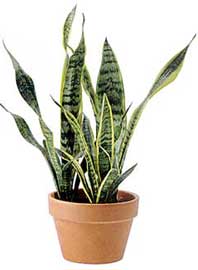
Snake Plant (Sansevieria Trifasciata)
Red-Edged Dracaena (Dracaena Marginata)

...

Body Language Basics

Body language is fascinating. People rarely recognize how much information they give off and how noticeable it is to the human eye. Even to the untrained human eye. It is said that no less that 50 percent of information on a person's character, impact and credibility is conveyed through no verbal communication.
The following list takes some common body postures and states the persons position.

Arms crossed:
Defensive and cautious.

Resting chin on palm:
Critical, cynical and negative towards the other person.

Dropping eyeglasses onto the lower bridge of the nose and peering over them:
Causes negative reactions in others.

Slowly and deliberately taking off glasses and carefully cleaning the lens:
The person wants to pause and think before raising opposition or asking for clarification.

Pinching bridge of the nose:
Communicates great thought and concern.

Nose-rubbing or nose-touching:
A sign of doubt, it often reveals a negative reaction.

Rubbing around ears:
Performed while weighing an answer, commonly coupled with 'well, I don't know'.

Resting feet on a desk or chair:
Gestures of territorial hegemony.

Swaying back:
Weak ego.

Retracted shoulders:
Suppressed anger.

Direct Eye Contact:
Interested, likes you

Smiling Eyes:
Is comfortable

Relaxed Brow:
Comfortable

Limited or No Eye Contact :
Lying, uninterested, too confined, uncomfortable, distracted

Tension in Brow :
Confusion, tension, fear

Shoulders hunched forward :
Lacking interest or feeling inferior

Rigid Body Posture :
Anxious, uptight

Crossed arms :
Can be just cold, protecting the body, or defensive

Tapping Fingers :
Agitated, anxious, bored

Fidgeting with hands or objects (i.e., pen) :
Bored or has something to say

Leaning forward :
Interested

Fingers Interlocked placed behind the head leaving elbows open and armpits exposed :
Very open to ideas, comfortable

Mirroring you :
Likes you and wants to be friendly

Still  :
More interested in what you are saying than anything

Eyes open slightly more than usual:
Gives people the impression that they are welcome.

Breath faster: Nervous or angry

Inhaling loudly and shortly: Wants to interrupt a speaking person

Loud sigh: Understand the thing that is being told.

Twisting the feet continuously : A person is nervous or concerned, but can also mean that a person is stressed or angry and that he don't want to show that to everybody.

Legs wide apart or Sitting straddle-legged: Shows that a person is feeling safe, and is self - confident. Can also show leadership.

A big smile that goes on longer and disappears slower.: Unreal or fake smile

Crossed legs with highest foot in the direction of the speaker.: Relaxed and self-confident and they are listening very carefully.

Rapidly nodding your head : Shows impatient and eager to add something to the conversation

Slowly nodding: Shows interest and that they are validating the comments of the interviewer, and this subtly encourages him to continue.

Dangling the loose shoe from the toes : Signals physical attraction

Rubbing your collar: Nerves

Adjusting your tie: Insecurity

Pressed Lips: Pressed lips convey disagreement and disapproval. It communicates a desire to end the discussion. A raised chin implies aggression that may be acted on if the conversation is not ended.

Pursed Lips: This is also a sign of disapproval. It indicates that the person has fixed views that cannot be changed. This usually reveals an arrogant and superficial character.

Biting the Lips: The person expresses embarrassment when he bites his lips. He also communicates a lack of self-confidence.

Reading Hand Signals: People have been granted with two hands: the left and the right hand. The left has been dubbed as the "emotional hand" since an imaginary line can be drawn from the third finger leading directly to the heart. This is why the wedding ring is placed on this finger. The right hand, literally on the other hand. has been named the "proper hand" since it is with this hand that people communicate a blocking or stopping signal.

Open Hands: Open hands may be demonstrated by showing the palm of one's hand, especially in a conversation or an argument.. This expresses a trust in other and an interest in their opinions. It also offers an opinion and invites the sharing of the other person's view.

Covered Hands: This is expressed by raising the back of one or both hands against others. This indicates the setting up of barriers or the keeping of distance. It is an act of concealing feelings and covering insecurity

Clinging Hands: Those who cling to objects, such as handbags. files or tables. show a need for support. This action conveys confusion or insecurity. It expresses fear and difficulty in coping with the current situation.

Twisted Hands ( crossing both hands then clasping the palms together) : Expression of a complex personality. It may indicate a difficult emotional life. The way the palms are held together conveys a need to hide something.

Clasping the hands : indicates defence.

Shrugged shoulders: You can recognize stressed shoulders by the fact that they are a bit shrugged, which does make the head look smaller. The meaning of the signal comes from crouching in dangerous situations. The meaning of this posing depends on the combination. In combination with big eyes it means that someone is concerned about something that is going to happen. In combination with a face that is turned away it means that the person wants to be left alone. An introvert person has nearly always those stressed shoulders.

Difference in level of both shoulders: By most of the people the left and the right shoulder are of the same height. When they are not, it often means that someone is doubting about what he is going to do. With this movement we simulate (unconscious) that we are weighing the possibilities. Sometimes when someone makes this movement, his head will move a little like he is looking above.

Crossed arms: There are a lot of different explanations of the meaning of crossed arms. When someone has crossed arms and he is shaking his head it means that he does not agree with you. But he can also cross his arms when he is frightened, then his arms give him some protection. Another option is that he is feeling cold and he is trying to hold his body-warmth with him. When someone is sitting in a chair with his arms crossed, it indicates that the person is relaxed.

Making a fist from your hands: A fist is a sign for aggression. It comes from hitting someone. But it is seldom used with a threatening meaning. Most of the time it is used to indicate that you are angry or irritated.

Holding the hand before the mouth: Holding a hand before your mouth means that you are hiding something. In western countries it is impolite to belch or to hiccup. So someone can hold his hand before his mouth to hide that he is hiccupping. When someone puts his hand before his mouth when he is talking it indicates that he is saying something or has said something that he did not want to say.

Making the eyes look larger: The meaning of making the eyes look larger can be that someone is astonished. In that case he opens his mouth a little. It can also mean that he is happy or that he likes the thing that is talked about. And because it means that you like something, you can use it on purpose. It pleases people when you have your eyes opened a bit further. When people open their eyes a bit further it can also mean that they are unhappily surprised. Then they will frown their eyebrows.

Raising the eyebrows: Raising the eyebrows shortly means that people are surprised. They raise their eyebrows to allow them to look better. But it can also mean that somebody is looking at you, and that he likes you.

Raised forehead: A raised forehead often means that someone is remembering something he has seen. This often happens very quickly. It can also be a sign of a certain emotion. It is a biological reflex that you raise your forehead a little when you are crying so the tears can move easier.

Pursed lips: When somebody purses his lips it means that he has to make a decision and is thinking about that. Sometimes he also moves his lips, like he is saying the possibilities. When somebody purses his lips, he often looks a bit upward.

Firm Handshake: The strong, firm handshake usually is given by a person who is sure and confident of themselves.

Weak hand shake: People who give these types of handshakes are either nervous, shy, insecure, or afraid of interaction with other people.

Cleared your throat: Nervousness.

Bitten your fingernails:
Nervousness.

Wring your hands: Nervousness.

Paced the floor: Nervousness.

A person is bouncing their legs and their arms are crossed over or their torso is slumped: Closed off

eBook: The Definite Book On Body Language
...

Knots

French Bowline Knot

The French Bowline is a knot that neither slips nor jams and unties easily. It has two loops that can be adjusted to fit.


Square Knot
The square knot, also called the reef knot, is the best known knot for bending two lines together. However, it can jam on a strain and become very difficult to untie.


Clove Hitch
A clove hitch is the best all-round knot for bending to a ring, spar, or anything else that is round or nearly round.


Half Hitch
A clove hitch will not jam and seldom pulls out. A slack clove hitch, however, might work itself out. For that reason, it is a good idea to put a half hitch in the end. A half hitch, by the way, never becomes a whole hitch. Put another one on, and all you have is two half hitches.

The Climb


Which Goat are You?

Green Goats
  • A goat who wants to help others.
  • A goat who focuses on having friends.
  • A goat who takes responsibilities for own mistakes.
  • A goat who assumes nothing and takes courage to ask questions.
  • A goat who respects others intelligence.
  • A goat who listens.
  • A goat obsessed with facts and truths.
  • A goat who knows limits and accepts it can be wrong.
  • A goat who is not afraid to fail because failure is an option.
  • A goat who is not afraid of success.
  • A goat who discuss problems with others.
  • A goat who takes nothing personally.
  • A goat impeccable with own words.
  • A goat who understands.
  • A goat who knows not everything and try to know more.
  • A goat who is grateful for the present.

Red Goats
  • A goat who scorns the efforts of others.
  • A goat who focuses on differences with others.
  • A goat who blames the world for all problems.
  • A goat who assumes the worst of everyone.
  • A goat who won't take responsibility.
  • A goat who is afraid.
  • A goat who has to be right in everything.
  • A goat who tells others.
  • A goat who see no flaws and thinks its always right.
  • A goat who takes out problems on others.
  • A goat who takes everything personally.
  • A goat who knows everything.
  • A goat obsessed with status.
  • A goat who believes its about age.
  • A goat who thinks it is entitled and the world owes it everything.

Coping with Infidelity and Breakup

Lost and all alone
I always thought that I could make it on my own
Since you left I hardly make it through the day
My tears get in the way
And I need you back to stay

I wander through the night
And search the world to find
The words to make it right
All I want is just the way it used to be
With you here close to me
I’ve got to make you see

That I’m lost without your love
Life without you isn’t worth the trouble of
I’m as helpless as a ship without a wheel
A touch without a feel
I can’t believe it’s real...

And someday soon I’ll wake
And find my heart won’t have to break

Yes I’m lost without your love
Life without you isn’t worth the trouble of
All I want is just the way it used to be
I need you here with me
Oh darlin’ can’t you see...
If we had love before
We can have it back once more

Recover from a Breakup
Why do breakups hurt so much, even when the relationship is no longer good? A divorce or breakup is painful because it represents the loss, not just of the relationship, but also of shared dreams and commitments. Romantic relationships begin on a high note of excitement and hope for the future. When these relationships fail, we experience profound disappointment, stress, and grief.

Coping with a spouse's infidelity is one of life's most stressful events. Discovering that a spouse has cheated, or even entertaining suspicions that a partner might be cheating, can be a devastating experience. A spouse's infidelity often brings forth feelings of rejection, betrayal, anger, sadness, and doubt.

Recovering from a breakup or divorce is difficult. However, it’s important to know (and to keep reminding yourself) that you can and will move on. But healing takes time, so be patient with yourself.

Allow Yourself to Grieve
Grief is a natural reaction to loss, and the breakup or divorce of a love relationship involves multiple losses:
  • Loss of companionship and shared experiences (which may or may not have been consistently pleasurable)
  • Loss of support, be it financial, intellectual, social, or emotional
  • Loss of hopes, plans, and dreams (can be even more painful than practical losses)

Care For Yourself
  • Make time each day to nurture yourself. Help yourself heal by scheduling daily time for activities you find calming and soothing. Go for a walk in nature, listen to music, enjoy a hot bath, get a massage, read a favorite book, take a yoga class, or savor a warm cup of tea.
  • Pay attention to what you need in any given moment and speak up to express your needs. Honor what you believe to be right and best for you even though it may be different from what your ex or others want. Say "no" without guilt or angst as a way of honoring what is right for you.
  • Stick to a routine. A divorce or relationship breakup can disrupt almost every area of your life, amplifying feelings of stress, uncertainty, and chaos. Getting back to a regular routine can provide a comforting sense of structure and normalcy.
  • Take a time out. Try not to make any major decisions in the first few months after a separation or divorce, like starting a new job or moving to a new city. If you can, wait until you’re feeling less emotional so that you can make better decisions.
  • Avoid using alcohol, drugs, or food to cope. When you’re in the middle of a breakup, you may be tempted to do anything to relieve your feelings of pain and loneliness. But using alcohol, drugs, or food as an escape is unhealthy and destructive in the long run. It’s essential to find healthier ways of coping with painful feelings.
  • Explore new interests. A divorce or breakup is a beginning as well as an end. Take the opportunity to explore new interests and activities. Pursuing fun, new activities gives you a chance to enjoy life in the here-and-now, rather than dwelling on the past.

This is Your Awakening

You realize it’s time to stop hoping and waiting for something to change, or for happiness, safety and security to magically appear over the next horizon. You realize that in the real world there aren’t always fairy tale endings, and that any guarantee of “happily ever after” must begin with you… and in the process a sense of serenity is born of acceptance.

You learn that people don’t always say what they mean or mean what they say and that not everyone will always be there for you and that everything isn’t always about you.

So, you learn to stand on your own and to take care of yourself… and in the process a sense of safety and security is born of self-reliance.

Then you learn about love. You learn to look at relationships as they really are and not as you would have them be. You learn that alone does not mean lonely.

Then, you begin to take responsibility for yourself by yourself and you make yourself a promise to never betray yourself and to never, ever settle for less than your heart’s desire.

You make it a point to keep smiling, to keep trusting, and to stay open to every wonderful possibility.

You hang a wind chime outside your window so you can listen to the wind.

Finally, with courage in your heart, you take a stand, you take a deep breath, and you begin to design the life you want to live as best you can.