Showing posts with label Clean Air. Show all posts

Breathing Techniques

Proper breathing is the very essence of life. It is how our vibration works and why it happens. Breathing is the most important life function we perform. It regulates the heartbeat. Proper deep breathing is a natural way to increase the energy level and the enjoyment of life. It is the method we use to take in oxygen, which enables us to perform the activities of life and as a way of eliminating 70 percent of all the wastes generated by the body.

The practice of deep breathing exercises accelerates the intake of oxygen. Oxygen is the most important chemical in the body. It is a powerful stimulant. The body requires about 88 pounds of oxygen daily. Its main function is purification. Hemoglobin, the red element in the blood, is an iron molecule that is magnetic. It reacts to vibration to produce the oxygen carrying component of the blood. Iron is a positive ion and oxygen is a negative ion. Negative ions are attracted to hemoglobin. These are the most abundant substances in the body. Deep breathing recharges the hemoglobin.

We take approximately 21,600 breaths of air each day. The slower and deeper the breathing, the longer the life span. Rhythmic deep breathing is Nature's tranquilizer and can be used to reduce stress and release pain.

Learn to breathe energy as well as air. The result will be increased electromagnetic flow into your body, which will bring up suppressed feelings. When you learn to open your breath and relax in the presence of your feelings, you align yourself with your natural healing flow of aliveness. Your awareness will be heightened, old behavior patterns will disappear and physical dis-ease will be replaced with health and youth. The reults are permanent.

Conscious connected breathing is communication with the source of life and a deep peace within ourselves. With proper breathing the physical body feels lighter, freer and we are clearer in our thinking. We will experience a more joyous outlook, emotionally we will be calmer and more serene in dealing with the situations that arise in our daily lives. During tense or anxious times, pause for a moment and become aware of your breathing. Breath slowly and deeply. With each breath comes an increase in peace. The key is to become mindful of the breathing process. The easiest way to focus in the present is to spend time consciously breathing deep into your lungs. Continue this practice until you do not have to think about the process, then it will become automatic. Conscious connected breathing allows us to live in the now.


Breath of Fire

This exercise is done while sitting in a chair or on the floor. Take a deep breath in through the nose, then exhale quickly and forcefully, out through the mouth. Inhalation through the nose will happen naturally after each exhalation. Placement of hands is optional. It must be performed for one full minute followed by one minute of rest and then another minute of breathing exercise for a total of five minutes. This technique helps in the metabolism of fat. Avoid cold drinks afterwards. This activity is equivalent to running two miles.

***

Indoor Plants and Clean Air

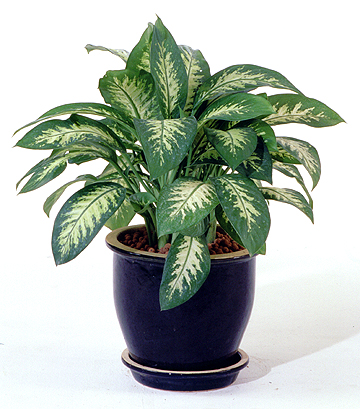
Houseplants are valuable weapons against indoor air pollution. They can absorb harmful chemicals and improve air quality, making your home or office a more pleasant place to live or work.

The most common harmful airborne chemicals found in the average home or office are formaldehyde, benzene, trichloroethylene, and carbon monoxide. Even in low concentrations, these chemicals can cause a variety of health problems.

Formaldehyde is found in virtually all indoor environments. It is used in particle board or pressed wood products to make office or household furniture, in many consumer paper products, in carpets, permanent-pressed clothes, water repellents, and fire retardants. Other sources of formaldehyde include natural gas, kerosene, and cigarette smoke. Formaldehyde irritates the membranes of the eyes, nose, and throat and can cause headaches and allergic dermatitis. It is suspected of causing a rare type of lung cancer in cases of long-term exposure.

Benzene is present in inks, oils, paints, plastics, and rubber. It is also used in the manufacturing of detergents, dyes, and some pharmaceuticals. In addition to irritation of the eyes and skin, chronic exposure to even low levels of benzene causes headaches, loss of appetite, drowsiness, psychological disturbances, and disease of the blood system, including anemia.

Trichloroethylene is used by the dry cleaning industry and in printing inks, paints, varnishes, and adhesives. This chemical is considered to be a potent liver carcinogen.

Carbon Monoxide is found in cigarette smoke and is produced by the incomplete combustion of fuel. Exposure to low levels can cause drowsiness and headaches.
Elephant Ear Philodendron (Philodendron Domesticum)

Cornstalk Dracaena (Dracaena Fragrans Massangeana)
Heartleaf Philodendron (Philodendron Scandens Oxycardium)

English Ivy (Hedera Helix)
Chinese Evergreen (Aglaonema Modestum)
Spider Plant (Chlorophytum Comosum)
Janet Craig Dracaena (Dracaena Deremensis Janet Craig)
Warneck Dracaena (Dracaena Deremensis Warneckii)
Weeping Fig (Ficus Benjamina)
Golden Pothos (Epipiremnum Aureum)
Peace Lily (Spathiphyllum Mauna Loa)
Philodendron Selloum (Philodendron Bipinnatfidum Hope)
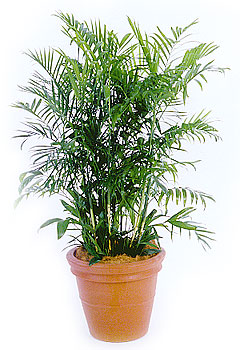
Bamboo Palm (Chamaedorea Sefritzii)
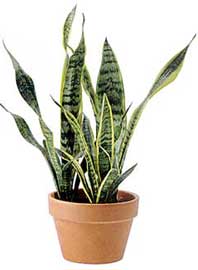
Snake Plant (Sansevieria Trifasciata)
Red-Edged Dracaena (Dracaena Marginata)

...