
Positively Begin Your New Day
By Krista Butler
1. Drink A Glass Of Water As Soon As You Wake Up
This re-hydrates your body, revs up your digestive system, and gets things flowing. You may notice positive changes like clearer skin and better digestion. Bonus points if you add a squeeze of fresh lemon juice or a teaspoon of apple cider vinegar.
2. Think Of One Thing For Which You Have Gratitude
This sets the stage for positivism throughout the day. If you come up with three or five things, even better.
3. Step Outside And Take A Deep Breath
Fill your lungs with fresh air. Even if it’s cold outside. This only takes 10 seconds! It reminds you that you are alive and breathing.
4. Move Your Body
You don’t necessarily have to do an intense workout before breakfast, but moving your body even a little is a great way to get the blood flowing and shake the body into wake-up mode. Simply doing a few stretches is a great option. Or turn on your favorite song and dance like no one is watching.
5. Say Your Affirmations
Look into the mirror and say something positive to yourself. Some ideas:
- I radiate beauty, confidence and grace.
- Every cell in my body is healthy and vibrant.
- I feel great!


Crossfit
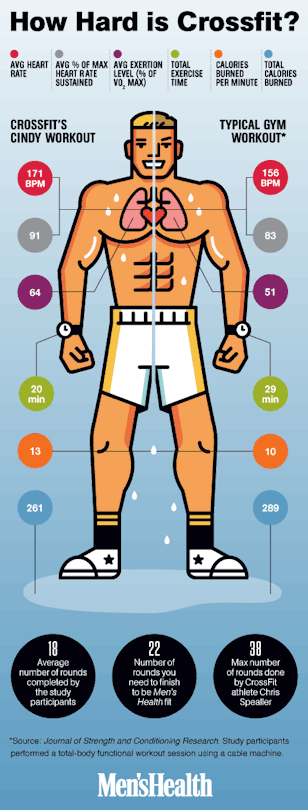
Set a timer on your watch or phone for 20 minutes. Do 5 pull-ups, 10 pushups, and 15 squats, in that order. That’s 1 round. Do as many rounds as you can before the time runs out.
 Pullup
Use an overhand grip to hang from a pullup bar with your arms straight. Pull your chest to the bar. Pause, and then return to the starting position.

Pushup
Assume a pushup position. With your elbows tucked, lower your chest until it’s just a few inches off the floor. Pause, and push yourself back up.

Squat
Stand with your feet set slightly beyond shoulder width. Now push your hips back and lower your body as far as possible. Stand back up.

Use an overhand grip to hang from a pullup bar with your arms straight. Pull your chest to the bar. Pause, and then return to the starting position.

Pushup
Assume a pushup position. With your elbows tucked, lower your chest until it’s just a few inches off the floor. Pause, and push yourself back up.

Squat
Stand with your feet set slightly beyond shoulder width. Now push your hips back and lower your body as far as possible. Stand back up.
***
Solution Oriented Mind
Problem Oriented vs Solution Oriented - By Steve Mueller
Every person approaches a problem in a different way. Some focus on the problem or the reason why a problem emerged (problem focused thinking). Others prefer to think about possible solutions that help them to solve a problem (solution focused thinking).
Approaching a difficult situation problem oriented might be helpful if we attempt to avoid similar problems or mistakes in the future, but when it comes to solving the problem we simply waste large amounts of our precious time! Problem focused thinking does not help us at all to solve difficult situations, which is especially necessary in times where one must find quick solutions to an upcoming problem. Furthermore the problem focused approach can have negative effects on ones motivation.
We start to think solution oriented once we are aware that we cannot change certain facts/problems and will only spend our time in an inefficient way when we seek for the possible reasons for these situations. By clarifying the reasons why a problem need to be solved and the tasked required is important then we can focus on solutions in attaining goals we desire.
5 Traits of a Solution Oriented Person - By Wendy Nicole

Every person approaches a problem in a different way. Some focus on the problem or the reason why a problem emerged (problem focused thinking). Others prefer to think about possible solutions that help them to solve a problem (solution focused thinking).
Approaching a difficult situation problem oriented might be helpful if we attempt to avoid similar problems or mistakes in the future, but when it comes to solving the problem we simply waste large amounts of our precious time! Problem focused thinking does not help us at all to solve difficult situations, which is especially necessary in times where one must find quick solutions to an upcoming problem. Furthermore the problem focused approach can have negative effects on ones motivation.
“Doubt kills more dreams than failure ever will.” - Suzy Kassem
We start to think solution oriented once we are aware that we cannot change certain facts/problems and will only spend our time in an inefficient way when we seek for the possible reasons for these situations. By clarifying the reasons why a problem need to be solved and the tasked required is important then we can focus on solutions in attaining goals we desire.
5 Traits of a Solution Oriented Person - By Wendy Nicole
- Have the ability to look at the situation for what it is. Don’t get emotionally involved. Evaluate the facts and only focus on the possibility of what could be the future.
- Systematic and strategic. After assessing the situation, they look for ways to bring their idea to life. What happened or what was is no longer a factor. Their intention is to move from point A to point B. They are intentional and they are relentless in their pursuit to change their reality.
- Doesn't feed the fear and doesn't bow down to excuses….the shoulda, couldas,and if’s have no place in their efforts to move forward. They have the ability to ask themselves the hard questions. They don’t run from the ugly truth. They are willing to face it so that they don’t make the same mistake again. They don’t get stuck in the “I don’t know zone” because they are willing to explore their options. They are able to stay calm in the midst of chaos. They have an idea of what the end result looks like. They make decisions that are in alignment with their purpose. They don’t make blind decisions. Consideration, research, and soul searching is required to help them become effective decision makers.
- Hands down are a “Get it Done Person” regardless of adversity, limited or no resources. When faced with a No or unsatisfactory situation they are determined to make things pan out in their favor because their WHY has been defined and they have a clear picture of their desired future self.
- Solution Oriented people excel in the midst of madness. They are able to see clear through the bullshit and zero in on what matters the most, their goals, their happiness, and personal welfare.

KEEP YOUR EYES ON THE PRIZE

Big Five Personality Traits

In psychology, the Big Five personality traits are five broad domains or dimensions of personality that are used to describe human personality, the five-factor model (FFM). The five factors are openness, conscientiousness, extroversion, agreeableness, and neurotic ism. Acronyms commonly used to refer to the five traits collectively are OCEAN or CANOE. Beneath each global factor, a cluster of correlated and more specific primary factors are found; for example, extroversion includes such related qualities as gregariousness, assertiveness, excitement seeking, warmth, activity, and positive emotions.
The Big Five model is able to account for different traits in personality without overlapping. Empirical research has shown that the Big Five personality traits show consistency in interviews, self-descriptions and observations. Moreover, this five-factor structure seems to be found across a wide range of participants of different ages and of different cultures.
A summary of the factors of the Big Five and their constituent traits, such that they form the acronym OCEAN:
Openness to experience: (inventive/curious vs. consistent/cautious). Appreciation for art, emotion, adventure, unusual ideas, curiosity, and variety of experience. Openness reflects the degree of intellectual curiosity, creativity and a preference for novelty and variety a person has. It is also described as the extent to which a person is imaginative or independent, and depicts a personal preference for a variety of activities over a strict routine. Some disagreement remains about how to interpret the openness factor, which is sometimes called "intellect" rather than openness to experience.
Conscientiousness: (efficient/organized vs. easy-going/careless). A tendency to be organized and dependable, show self-discipline, act dutifully, aim for achievement, and prefer planned rather than spontaneous behavior.
Extroversion: (outgoing/energetic vs. solitary/reserved). Energy, positive emotions, surgency, assertiveness, sociability and the tendency to seek stimulation in the company of others, and talkativeness.
Agreeableness: (friendly/compassionate vs. analytical/detached). A tendency to be compassionate and cooperative rather than suspicious and antagonistic towards others. It is also a measure of one's trusting and helpful nature, and whether a person is generally well tempered or not.
Neurotic ism: (sensitive/nervous vs. secure/confident). The tendency to experience unpleasant emotions easily, such as anger, anxiety, depression, and vulnerability. Neuroticism also refers to the degree of emotional stability and impulse control and is sometimes referred to by its low pole, "emotional stability".

Subscribe to:
Posts (Atom)